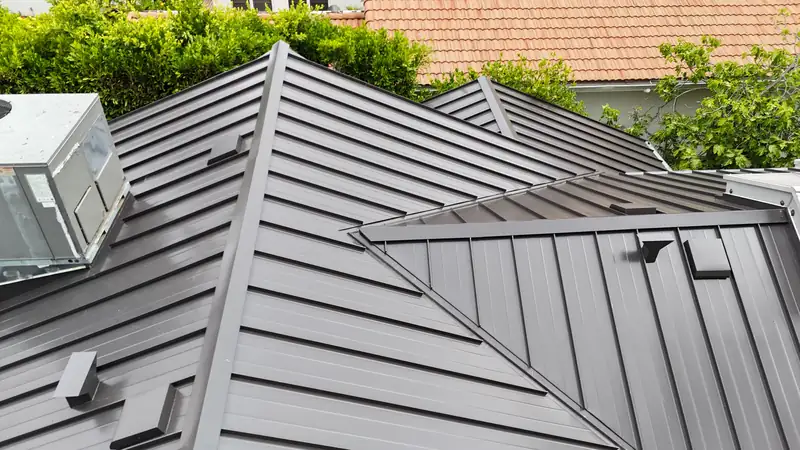
What a metal roof installation in Los Angeles involves
When people search for metal roof installation in Los Angeles, they are usually comparing two things at once: the roof itself and the company that will put it on. The roof matters, but the installation is where most metal roofs succeed or fail. A premium panel installed with poor flashing or a skipped deck repair will leak. A well-installed roof can be expected to last for decades.
On a typical Los Angeles home, the job has five parts:
- Inspection and measuring. We walk the roof, check the deck from the attic where we can, and measure every plane, valley, hip and penetration.
- Scope, color and permit. You get a written scope. Once you choose a panel and color, we file for the permit with your building department.
- Panel forming. Our standing seam panels are formed in our Van Nuys shop to the exact length of each roof plane, so most panels run eave to ridge in one piece.
- Tear-off and deck work. On most jobs the old roof comes off down to the sheathing. Soft or damaged boards are replaced before anything goes back on.
- Installation and inspection. Underlayment, flashing, panels and trim go on, the site is cleaned, and the building inspector signs off the permit.
Our metal roof installation process guide goes through each of these stages in order, with what you will see on each day.
Los Angeles conditions that change the install
A metal roof in Los Angeles is not installed the way it would be in Denver or Boston. Snow loads are rarely a concern here. Heat, fire, wind events and short bursts of heavy rain are.
Fire hazard zones
Large parts of the city, especially in the hills, sit inside a Very High Fire Hazard Severity Zone mapped by CAL FIRE. Roofs in those zones need a Class A rated roof assembly. Metal panels do not burn, but the rating applies to the whole assembly, so the underlayment and the details at the eaves, ridge and vents are chosen to match. You can look up your address on the CAL FIRE Fire Hazard Severity Zone maps, and we check it for you at the estimate.
Cool roof rules
California's Title 24 energy code can require a rated cool roof product when a roof is replaced, depending on the climate zone and the slope. Metal finishes carry published reflectance and emittance ratings, so we check the color you like against the rule before the panels are ordered, not after.
Heat and expansion
A dark metal roof in the San Fernando Valley in August gets very hot and moves as it heats and cools. Standing seam panels are held down by clips that let each panel expand and contract along its length. That is one reason we form panels to full length and do not screw through the face of the panel.
Winter storms
Southern California gets much of its yearly rain in a few winter storms. Valleys, wall flashings and the transitions around skylights and chimneys are where water tests a roof, and that is where our crew spends the most time.
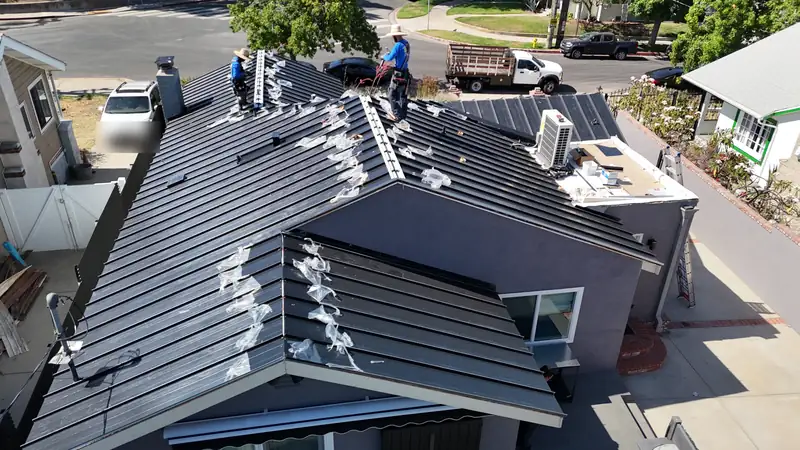
Permits for a metal roof in Los Angeles
Replacing a roof is permitted work. Inside the City of Los Angeles, the permit comes from the Los Angeles Department of Building and Safety (LADBS). Unincorporated areas go through LA County Building and Safety, and cities like Glendale, Burbank, Pasadena and Santa Monica run their own departments. We file with the right one for your address, schedule the inspections, and keep the signed-off permit card for your records.
A finished permit matters later. When you sell the house, a buyer's inspector may ask whether the roof was permitted, and an open or missing permit can slow a sale.
Standing seam, and the other metal roofs we install
Standing seam is our specialty and what most Los Angeles homeowners ask us for. Its clean vertical lines suit modern, mid-century, farmhouse and Spanish-influenced homes. We also install corrugated metal roofing, often on accessory buildings and rustic designs, and metal roofing that imitates shake, tile or slate for homeowners who want the look of a traditional roof with the fire performance of metal.
Why it matters who installs it
Most metal roof problems trace back to the installation, not the material. When you compare installers in Los Angeles, ask:
- Will your own employees install the roof, or a subcontracted crew?
- Where are the panels formed, and are they cut to the full length of each roof plane?
- Will the old roof come off, and who decides what deck repair is needed?
- Who files the permit and meets the inspector?
- Can I verify your license with the CSLB?
Our answers: our own crew, our own Van Nuys shop, a full tear-off unless an overlay is allowed and makes sense, and we handle the permit. Our license, #888710, is held by Eclipse Remodeling & Roofing Inc, dba Eclipse Metal Roofing, with C-39 roofing and C-43 sheet metal classifications. You can check it on the CSLB website.
Wondering whether your old roof can stay in place? Our page on metal roof over existing roof vs tear-off covers what California code allows.