Metal Roof Over an Existing Roof, or a Full Tear-Off?
Putting a metal roof over the existing roof sounds like an easy way to skip a messy step. Sometimes it is allowed and reasonable. Often it is not allowed, and when it is, it is not always a good idea. Here is how we decide.
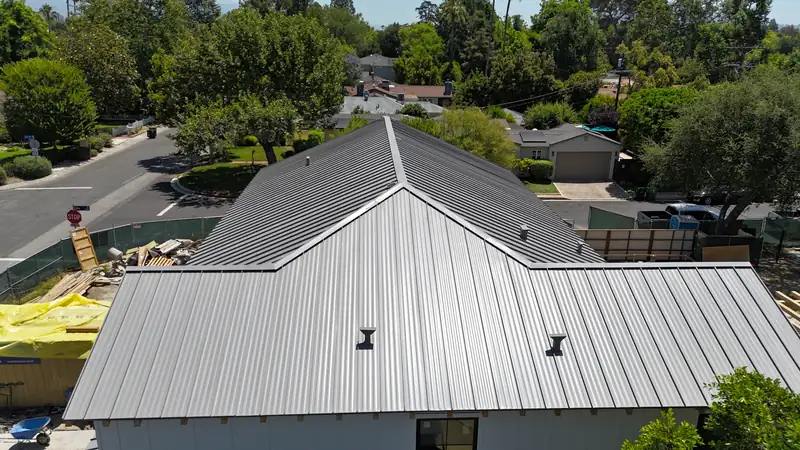
Can you put a metal roof over an existing roof?
A metal roof over an existing roof is called a roof recover or overlay. California adopts its residential building rules in the California Building Standards Code, and the residential code sets out when a new roof covering may go over an old one. In general terms, an overlay is not allowed when:
- ×the existing roof already has two or more layers,
- ×the existing roof is water-soaked or has deteriorated to the point that it is not an adequate base, or
- ×the existing roof is slate, clay tile or concrete tile.
Your local building department applies these rules and may add its own, and fire hazard zone requirements apply to the finished assembly either way. We confirm what is allowed on your address before we write the scope, not halfway through the job.
Metal over existing roof vs tear-off, side by side
| Overlay (metal over existing roof) | Tear-off | |
|---|---|---|
| When it is allowed | Only over one existing layer in sound condition, and not over tile or slate | Always |
| Deck inspection | The deck stays hidden under the old roof | Every board is seen, and damaged ones are replaced |
| Disposal | Little or none | The full old roof is hauled away |
| Roof height and edges | The roof gets thicker; edges, flashings and trim must account for it | Edges and flashing start fresh at the deck |
| Weight | Metal is light, but the old layer stays on the framing | The old layer comes off |
| Future roof work | The next re-roof removes two layers | One layer to remove next time |
When we recommend a full tear-off
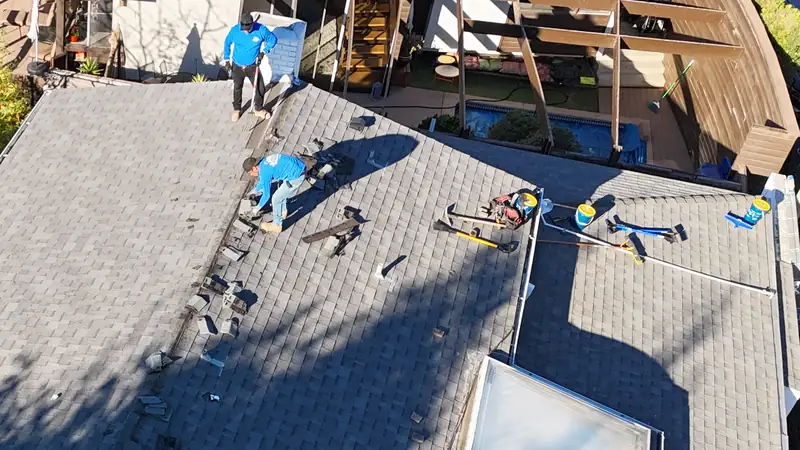
Most of our Los Angeles installs are full tear-offs, even when an overlay might be allowed. The main reason is the deck. A roof that has been leaking, even slowly, often has soft or stained sheathing that you cannot see from above. Covering it with a new metal roof locks the problem in. A tear-off lets us see every board and fix what needs fixing.
We also recommend a tear-off when:
- the existing roof is wood shake or has curled, brittle shingles that would telegraph through or trap moisture,
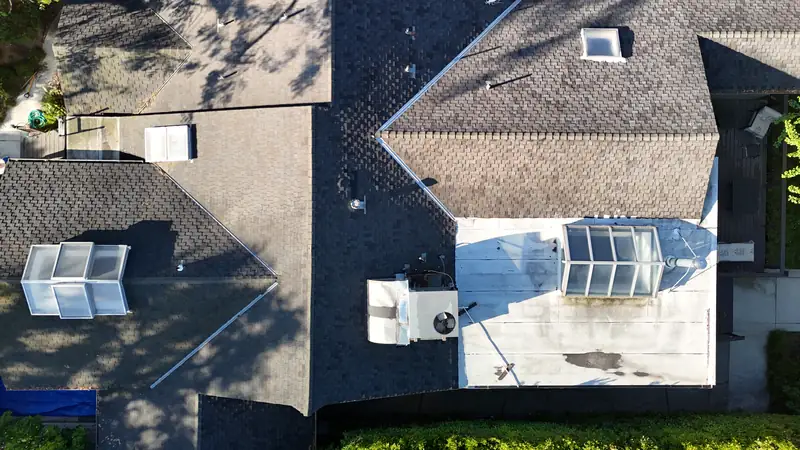
- the roof has many valleys, skylights or wall junctions, where old and new flashing would have to be layered together,
- the house is in a Very High Fire Hazard Severity Zone and we want a clean, documented Class A assembly from the deck up, or
- you plan to keep the house for a long time and want the next roofer to find one layer, not two.
When an overlay can make sense
An overlay can be a reasonable choice on a simple roof with a single layer of composition shingles in good shape, a solid deck, and few penetrations. In that case we still install a proper underlayment and new flashing at every edge and penetration, and we account for the added thickness at the eaves and rakes. If your roof qualifies and the numbers favor it, we will tell you.
Permits for a metal roof in Los Angeles
Whether the old roof comes off or stays, a re-roof is permitted work. Here is how the permit side works:
- Which department.
Inside the City of Los Angeles, permits come from LADBS. Unincorporated areas use LA County Building and Safety. Cities such as Glendale, Burbank, Pasadena and Santa Monica have their own.
- What the permit covers.
The roofing material, whether it is a tear-off or a recover, and the roof area. Fire zone and energy code requirements are checked against what we plan to install.
- Inspections.
Depending on the department, an inspector may look at the deck or underlayment before the panels go on, and always does a final inspection.
- Your record.
A finished permit is part of the house's history and matters when you sell.
We file the permit, schedule the inspections and meet the inspector. To see where the permit falls in the overall schedule, read the metal roof installation process and timeline.
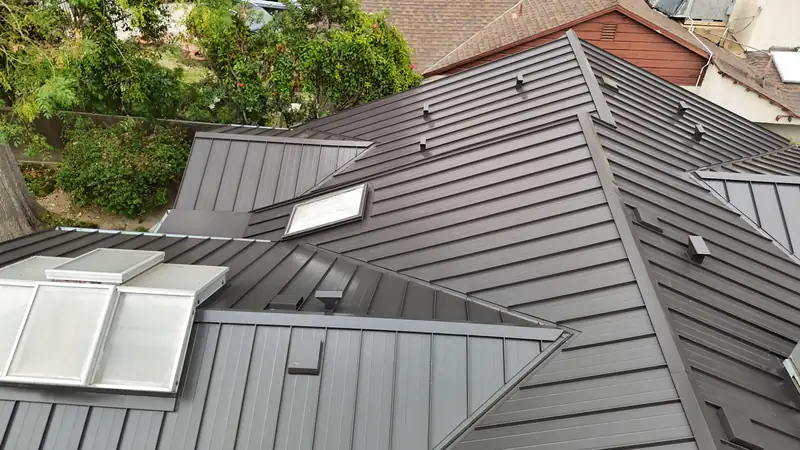
The metal itself does not change the answer
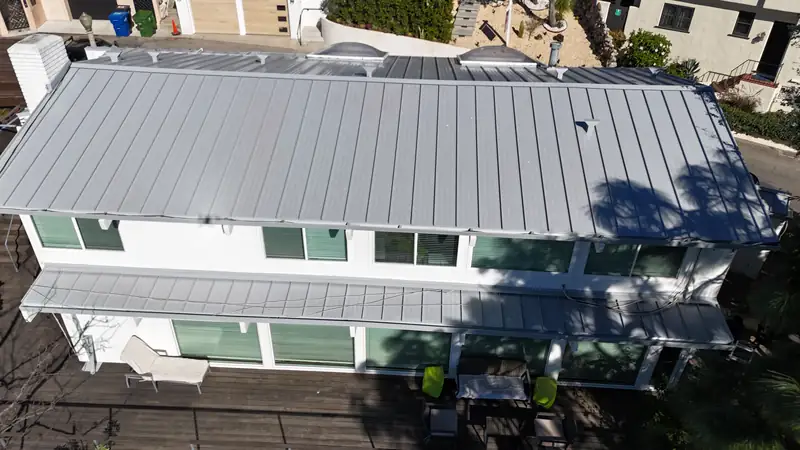
These rules apply whether the new roof is standing seam, our specialty, or another metal profile. We also install corrugated metal roofing and metal that imitates shake, tile or slate. For a broader look at installing in this area, see metal roof installation in Los Angeles.
Start with a free on-site estimate
We come to the house, look at the roof from the ground and from the roof itself, measure it, and walk you through what the install involves, step by step. You get a written scope and price for the roof that is actually there.
Prefer to talk first? Call (424) 419-1254.
Installation questions homeowners ask
Can you put a metal roof over shingles?
Sometimes. If there is only one layer of shingles, it is in good condition, and the deck is sound, an overlay may be allowed. We check on site and confirm with your building department before writing the scope.
Can a metal roof go over a tile roof?
No. California code does not allow a new roof covering over clay or concrete tile or slate. The tile has to come off first.
Is a tear-off worth it if an overlay is allowed?
Often, yes. A tear-off is the only way to see and repair the deck, and it leaves one layer for the next roofer. We explain the tradeoff for your roof at the estimate. See the metal roof installation process for where tear-off fits.
Do I need a permit to put a metal roof over my existing roof?
Yes. A recover is still a re-roof and needs a permit and inspection, just like a tear-off. We handle it as part of the job.
Who decides whether my roof can be overlaid?
The code and your building department set the limits. Within those limits, we look at the deck, the number of layers and the roof details, then recommend what we would do on our own house. Read more on metal roof installation in Los Angeles.